

The Return of Tapestry and Foliage Wallpaper: Why Nature Is Back on Our Walls
Olivia WelshFor decades, minimalism has dominated interior design, clean white walls, subtle textures, and barely-there patterns. Yet in recent years, something striking has happened: homes are becoming richer, warmer, and more expressive. At the centre of this shift is the revival of tapestry-style wall coverings and tree-and foliage-inspired wallpaper. What was once seen as old-fashioned is now one of the most sought-after interior trends, appearing in everything from boutique hotels to modern apartments.

Trudie Shades of Green, Wallpaper From The 70s
A Revival Rooted in Comfort and Storytelling
The resurgence of tapestry and nature-inspired wallpaper reflects a broader movement toward interiors that feel personal, layered, and emotionally comforting. After years of sleek minimalism, homeowners are craving spaces that tell stories, rooms that feel lived-in rather than staged.
Tapestry designs, historically associated with grand European interiors, offer exactly that sense of narrative. Traditional woven landscapes, forest scenes, and botanical compositions evoke history and craftsmanship, even when recreated through modern printing techniques. When used today, these designs are often paired with contemporary furniture, creating a striking blend of classic and modern elements that feels intentional rather than nostalgic.

Tapestry Landscape in Beige, Belarte Studio
Nature Indoors: The Rise of Biophilic Design
One of the strongest forces behind the popularity of foliage wallpaper is the growing emphasis on biophilic design, the idea that connecting interiors with nature improves well-being. Tree silhouettes, leafy patterns, woodland scenes, and tropical botanical prints bring visual calm and depth to a space, even when real greenery is limited.
Large-scale tree designs are particularly popular because they function almost like murals, creating the illusion of depth and landscape. Instead of simply decorating a wall, they transform it into a visual experience. In smaller rooms, soft repeating leaf patterns add texture without overwhelming the space, while dramatic forest scenes can turn living rooms or bedrooms into immersive environments.
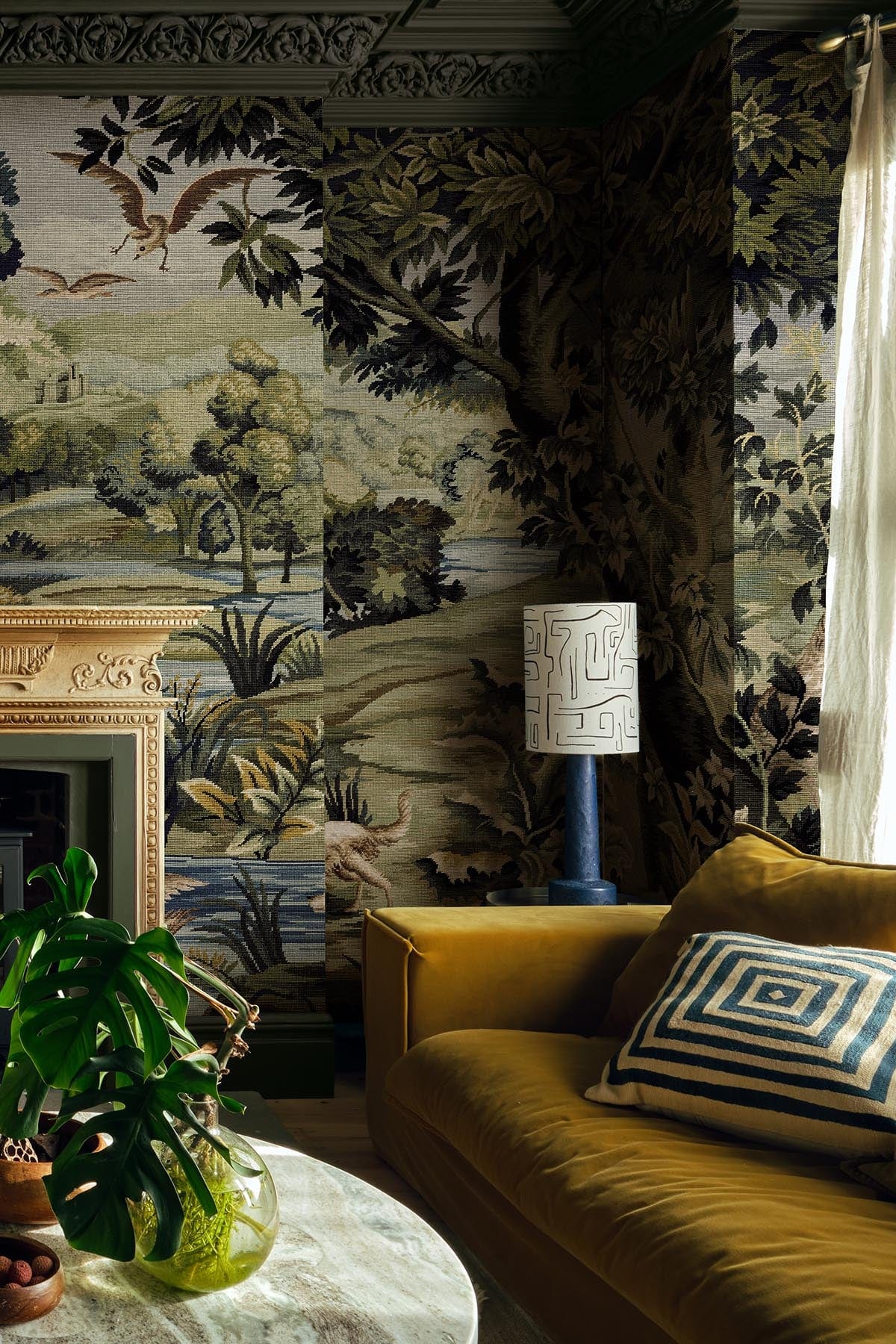
Verdant Tapestry Forest Green, Belarte Studio
Modern Interpretations of a Historic Look
What distinguishes the current revival from past trends is the variety of interpretations now available. Designers are not simply recreating traditional tapestries; they are reimagining them. Today’s options range from historically inspired medieval woodland scenes to abstract botanical patterns rendered in soft neutrals, monochrome palettes, or bold contemporary colours.
Textured wallpaper that mimics woven fabric is also gaining popularity. These designs echo the richness of traditional tapestry while remaining practical and easier to install. Digital printing technology allows intricate detail at a fraction of the cost of actual woven wall hangings, making the aesthetic accessible to a much wider audience.
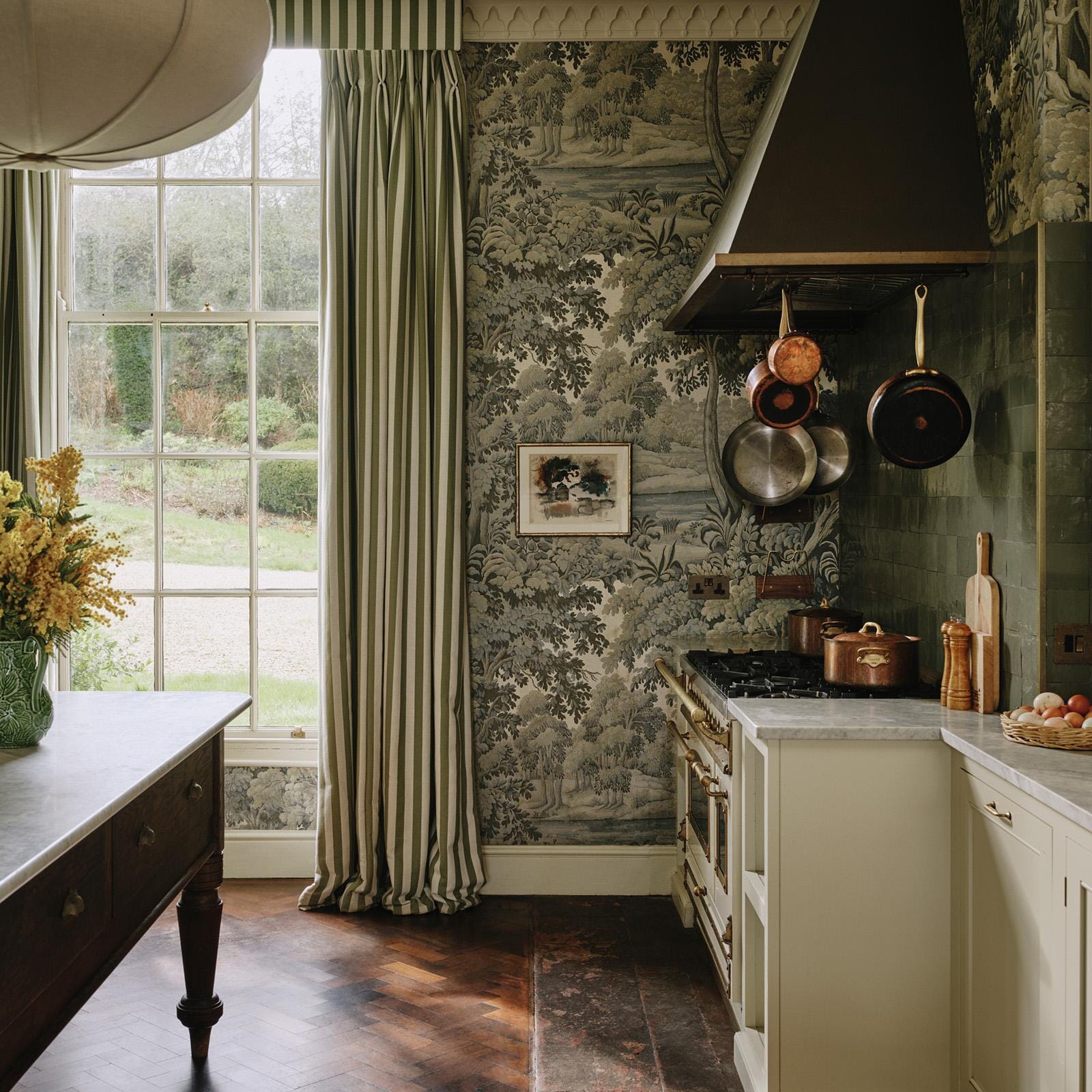
Plantasia Wallpaper in Sage, House of Hackney
Statement Walls and Layered Interiors
Another reason for the trend’s success is the rise of the statement wall. Rather than covering every wall in a room, many homeowners choose a single focal wall featuring a tapestry or foliage pattern. This approach keeps the design dramatic yet balanced, allowing the pattern to become an artistic centre piece without overwhelming the room.
Interior stylists often combine these wallpapers with natural materials, wood furniture, linen textiles, woven rugs, and warm lighting, to create layered interiors that feel both cosy and sophisticated. The result is a space that feels intentionally curated, reflecting both comfort and individuality.
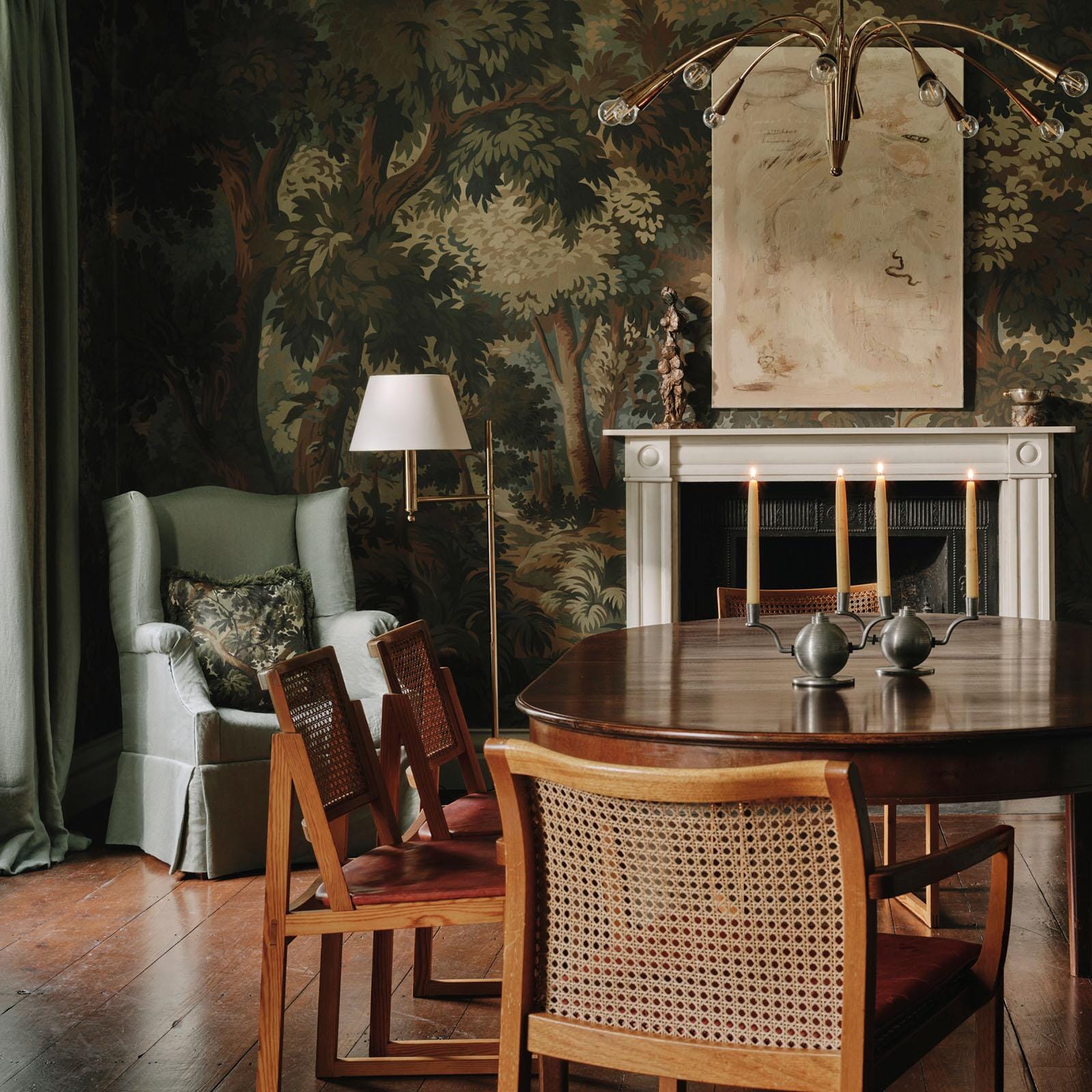
Arborea Wallpaper, House of Hackney
Sustainability and the Return of Craft Influence
There is also a cultural shift toward appreciating craftsmanship and heritage influences in design. Even when wallpaper is machine-produced, the visual reference to weaving, hand-drawn botanical illustrations, or historical patterns evokes the value of handmade artistry. Many modern wallpaper manufacturers are also emphasising eco-friendly inks, recyclable materials, and sustainable production methods, aligning the aesthetic return to nature with environmentally conscious choices.

Interior Designer Tiffany Howell
Why the Trend Is Likely to Stay
Unlike short-lived décor fads, the return of tapestry and foliage wallpaper aligns with several long-term movements: the desire for warmer interiors, the popularity of biophilic design, and the blending of classic and contemporary styles. Because the trend offers so many interpretations from dramatic forest murals to subtle leafy textures, it can adapt to changing tastes without disappearing entirely.
Moreover, wallpaper itself has undergone a renaissance. Improved adhesives, peel-and-stick technology, and easier removal processes have removed many of the barriers that once discouraged homeowners from experimenting with bold wall treatments. This flexibility encourages people to take design risks, further fuelling the popularity of expressive patterns like tapestries and botanical prints.

Interior Designer Ryan Stanton
Bringing the Look Into Your Own Home
For those considering the trend, the key is balance. A dramatic woodland mural works beautifully when paired with simple furniture and neutral accessories, while intricate tapestry-style prints pair well with classic wood tones and traditional detailing. Even a small space such as a hallway, reading nook, or bedroom headboard wall—can benefit from a carefully chosen foliage pattern.
Ultimately, the return of tapestry and tree-inspired wallpaper reflects something deeper than a decorative shift. It signals a renewed appreciation for texture, storytelling, and the calming influence of nature. As homes continue to evolve into spaces that prioritise comfort and personality, it is likely that walls filled with forests, leaves, and woven-inspired scenes will remain a defining feature of modern interiors for years to come.


